


What Are the Best Materials for Making a Wooden Light Box?
Wooden light boxes have become one of the most appealing laser-cut decor projects for makers, small businesses, gift sellers, and home crafters. They combine layered wood art with soft LED backlighting, creating a finished piece that feels part wall art, part shadow box, and part personalized display. Whether you want to build a night light for a child’s bedroom, a layered forest scene for a living room shelf, a holiday village window decoration, or a custom name sign for a wedding or baby shower, the material you choose will shape the final result.
For a wooden light box, the best material depends on your priorities: strength, weight, finish quality, cost, ease of cutting, and how cleanly the wood handles fine laser detail. Most DIY builders choose between birch plywood, basswood plywood, poplar plywood, MDF, and a few hardwood veneer panels. Among these, 1/8" birchwood plywood sheets are one of the best all-around options because they balance rigidity, smooth surface quality, attractive grain, and laser-friendly performance.
If you’re using an AlgoLaser machine to make layered wood art, shadow boxes, custom night lights, or illuminated display pieces, understanding the strengths and tradeoffs of each wood material will save you time, reduce waste, and improve the final look. In this guide, I’ll break down the best materials for making a wooden light box, explain which ones cut and engrave most cleanly, and show where each material fits in real-world projects.
Why Material Choice Matters for a Wooden Light Box
A wooden light box is more than just a stack of laser-cut panels. It’s a layered structure that needs to do several jobs at once:
· Hold its shape without warping
· Cut cleanly with fine detail
· Allow easy assembly into multiple layers
· Look attractive when lit from behind
· Provide enough strength for a frame or enclosure
· Work well with paint, stain, or a natural wood finish
Unlike a simple flat ornament or sign, a light box often includes several precision-cut layers spaced apart inside a shallow frame. That means the wood has to stay consistent from sheet to sheet. If the material is too soft, too fibrous, too warped, or too smoky after cutting, your alignment suffers and the final lighted effect won’t look as sharp.
That’s why material selection is one of the most important design decisions in any laser-cut light box project.
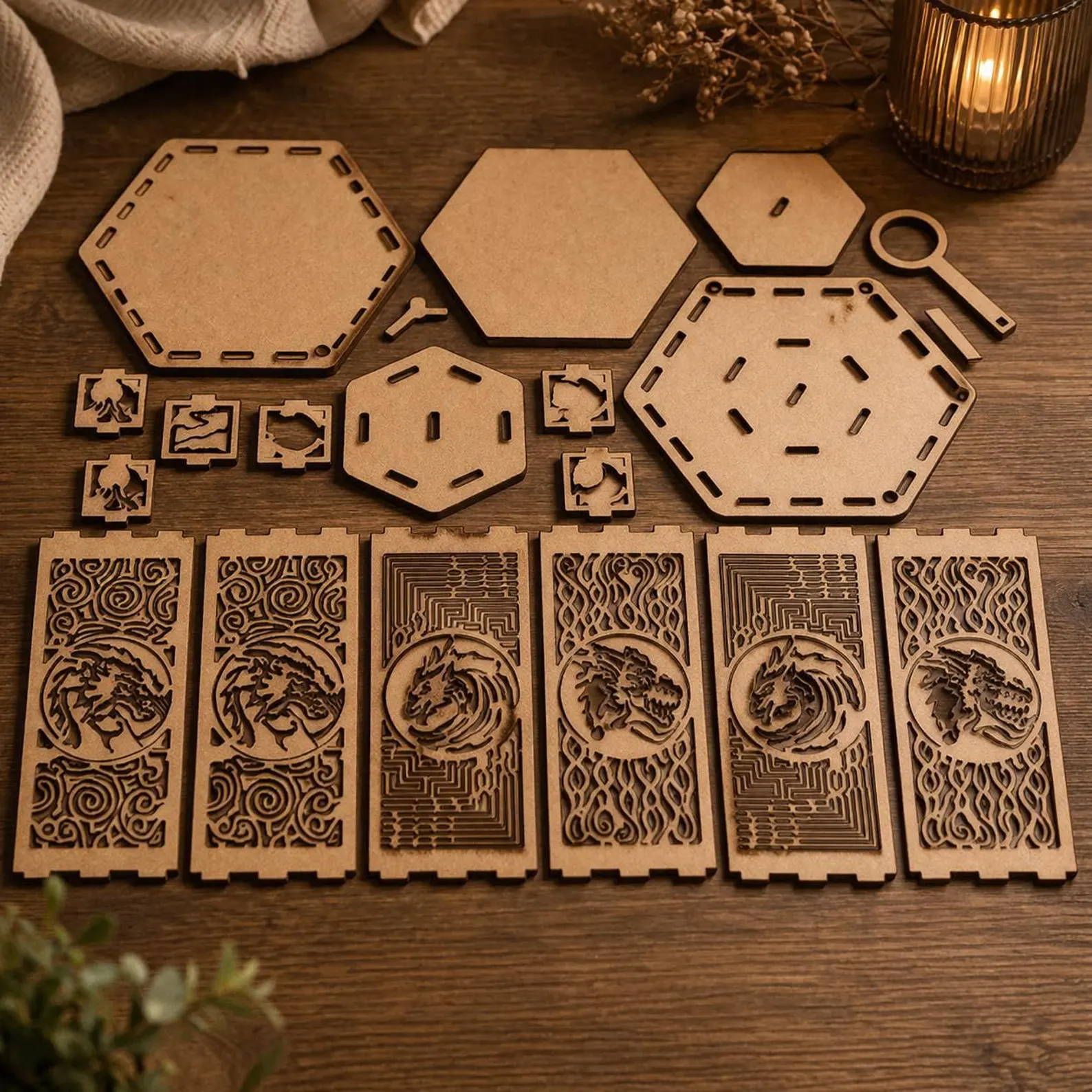
What Makes a Good Wooden Light Box Material?
Before comparing specific materials, it helps to define what “good” means in this context. The best wood for a laser-cut light box usually has the following qualities:
1. Consistent Thickness
A layered light box relies on repeatable spacing between panels. If one sheet is slightly thicker or thinner than another, the layers won’t sit evenly in the frame. Consistent 3mm / 1/8 inch plywood is usually the sweet spot for most hobby and small-business light boxes.
2. Flatness
Warped wood creates problems during laser focusing, cutting, and assembly. A slightly bowed panel may cut unevenly or fail to sit flush in the frame.
3. Clean Cutting Performance
Light box layers often include tiny windows, branches, stars, skyline outlines, lettering, or delicate filigree details. The material should cut with minimal charring and hold detail without splintering.
4. Good Surface Finish
Some makers want a natural wood grain look. Others want a smooth surface for painting, staining, or whitewashing. A good light box material should accept finishing well and look polished even up close.
5. Adequate Rigidity
The inner art layers can be lightweight, but the outer frame should still feel sturdy. Flimsy material can bend, crack, or sag over time.
6. Laser Compatibility
Different woods react differently to diode laser cutting and engraving. Some woods cut quickly and cleanly; others contain more glue, denser grain, or unpredictable knots that slow down the process.
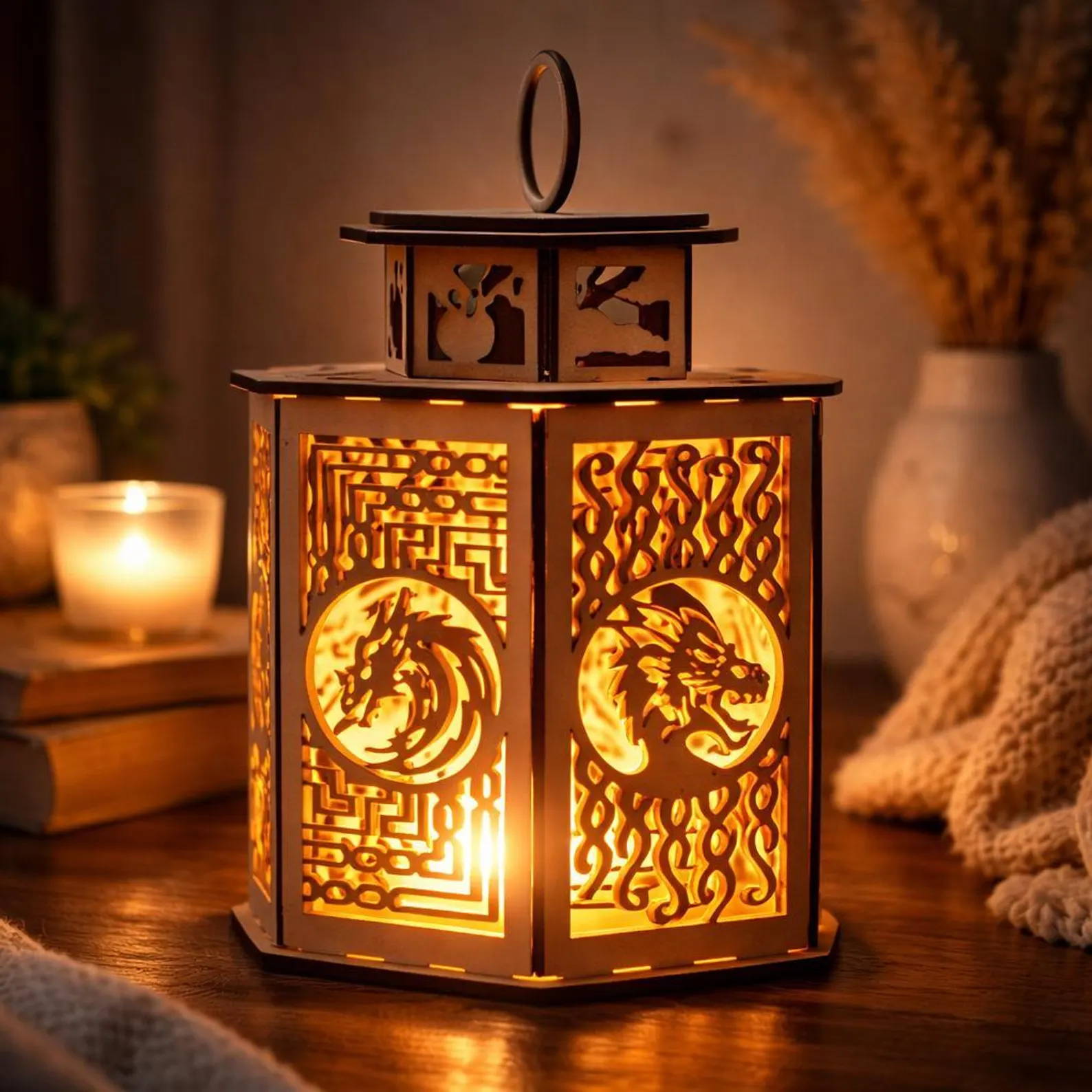
The Best Materials for Making a Wooden Light Box
1. Birch Plywood: The Best All-Around Material for Wooden Light Boxes
If you only want one answer, this is it: birch plywood is one of the best materials for making a wooden light box.
For most laser makers, 1/8" birchwood plywood sheets hit the sweet spot between appearance, strength, weight, and cutting performance. Birch has a clean, bright wood tone and a fine grain that works beautifully for layered art, custom night lights, scenic shadow boxes, holiday decor, and nursery signs.
Why birch plywood works so well
· Smooth surface with a premium look
· Stiffer than many softwood craft panels
· Holds fine laser-cut details nicely
· Easy to paint, stain, or leave natural
· Good balance between frame strength and layer weight
· Widely available in 3mm / 1/8 inch sheets
For makers using an AlgoLaser machine, birch plywood is especially appealing because it works well for both engraving and cutting. You can use it for the front frame, internal decorative layers, and even the back panel of the light box.
Best uses for birch plywood light boxes
· Forest or mountain layered scene light boxes
· Family name shadow boxes
· Nursery moon-and-stars night lights
· Seasonal village or Christmas light boxes
· Wedding or anniversary illuminated signs
· Layered mandala wall decor with LED backlighting
AlgoLaser recommendation
If you want a dependable starting point, AlgoLaser’s 1/8" birchwood plywood sheets (6pcs) are an excellent match for wooden light box builds because the thickness is appropriate for layered assembly and the finish suits both natural wood projects and painted display pieces.
2. Basswood Plywood: Great for Fine Detail and Easy Cutting
Basswood plywood is another top choice, especially for makers who prioritize easy cutting and delicate detail. Basswood is softer than birch, which can be a real advantage when your design includes tiny cuts, intricate silhouettes, or multiple layers of narrow bridges and fine linework.
Why basswood plywood is popular
· Very laser-friendly and easy to cut
· Smooth, pale surface ideal for painting
· Excellent for fine decorative detail
· Lightweight, which helps in multi-layer designs
· Common in hobby and craft laser projects
Basswood is particularly useful when you’re building a light box with many layers—for example, a 5-layer or 7-layer fantasy landscape, animal scene, or city skyline. Since the wood is lighter and easier to cut, it reduces strain on the project and can speed up production.
Potential downside
Basswood plywood is usually a bit softer and less rigid than birch. That’s not a dealbreaker, but if you’re building a larger frame or a freestanding light box with a deeper enclosure, you may prefer birch for the structural parts and basswood for the decorative inner layers.
Best use strategy
A smart hybrid approach is:
· Birch plywood for the frame
· Basswood plywood for the inner art layers
That gives you both strength and crisp laser detail.
3. Poplar Plywood: A Nice Middle Ground for Painted Light Boxes
Poplar plywood is often overlooked, but it can be a very practical choice for makers who want a material that is smooth, stable, and easy to paint. It tends to sit somewhere between basswood and birch in feel, depending on the specific panel quality and core construction.
Why poplar can work well
· Smooth face suitable for painted projects
· Often lightweight and reasonably stable
· Good for decorative front panels and side walls
· Cuts cleanly when the glue layers are decent
If your light box design is meant to be painted white, pastel, matte black, or custom color-matched, poplar can be a very good option because you’re less dependent on beautiful visible grain. It also works well for modern decorative light boxes, children’s room signs, and event signage where the final color is more important than the natural wood appearance.
4. MDF: Budget-Friendly and Smooth, but Not My First Choice
MDF (medium-density fiberboard) is one of the smoothest materials you can use in a laser project, and it’s often inexpensive. For certain wooden light box builds, it can work—especially if you plan to paint everything and want a perfectly uniform face.
Advantages of MDF
· Very smooth surface
· No visible wood grain
· Good for painted decorative pieces
· Usually inexpensive and easy to source
· Consistent density compared with some low-grade plywood
But here’s the tradeoff
MDF has some real downsides for wooden light boxes:
· Heavier than plywood
· Produces more smoke and burnt odor when laser cut
· Charred edges are more noticeable
· Not as attractive if you want a natural wood finish
· Fine tabs and narrow details can be more fragile
For those reasons, MDF is better as a paint-grade craft option than as a premium wood light box material. If your design is simple, flat, and fully painted, it can be fine. But for layered woodland scenes, heirloom gifts, or natural wood decor, birch or basswood usually looks much better.
5. Maple or Other Hardwood Veneer Plywood: Premium Look for Display Pieces
If you want a more upscale finish, hardwood veneer plywood—such as maple-faced plywood—can produce beautiful results. These materials can look more refined than standard craft plywood and are a good fit for gift-quality illuminated decor, gallery-style pieces, or interior display art.
Why hardwood veneer plywood is attractive
· More premium surface appearance
· Great for stained or clear-coated finishes
· Excellent for modern or minimalist decor
· Strong enough for frames and front panels
The main reason I don’t put maple veneer plywood at the very top is practicality. It’s often more expensive, not always as easy to source in laser-friendly craft sizes, and sometimes less forgiving if the veneer quality varies. For a production shop or experienced maker, it can be worth it. For most hobbyists, birch remains the easier all-around choice.
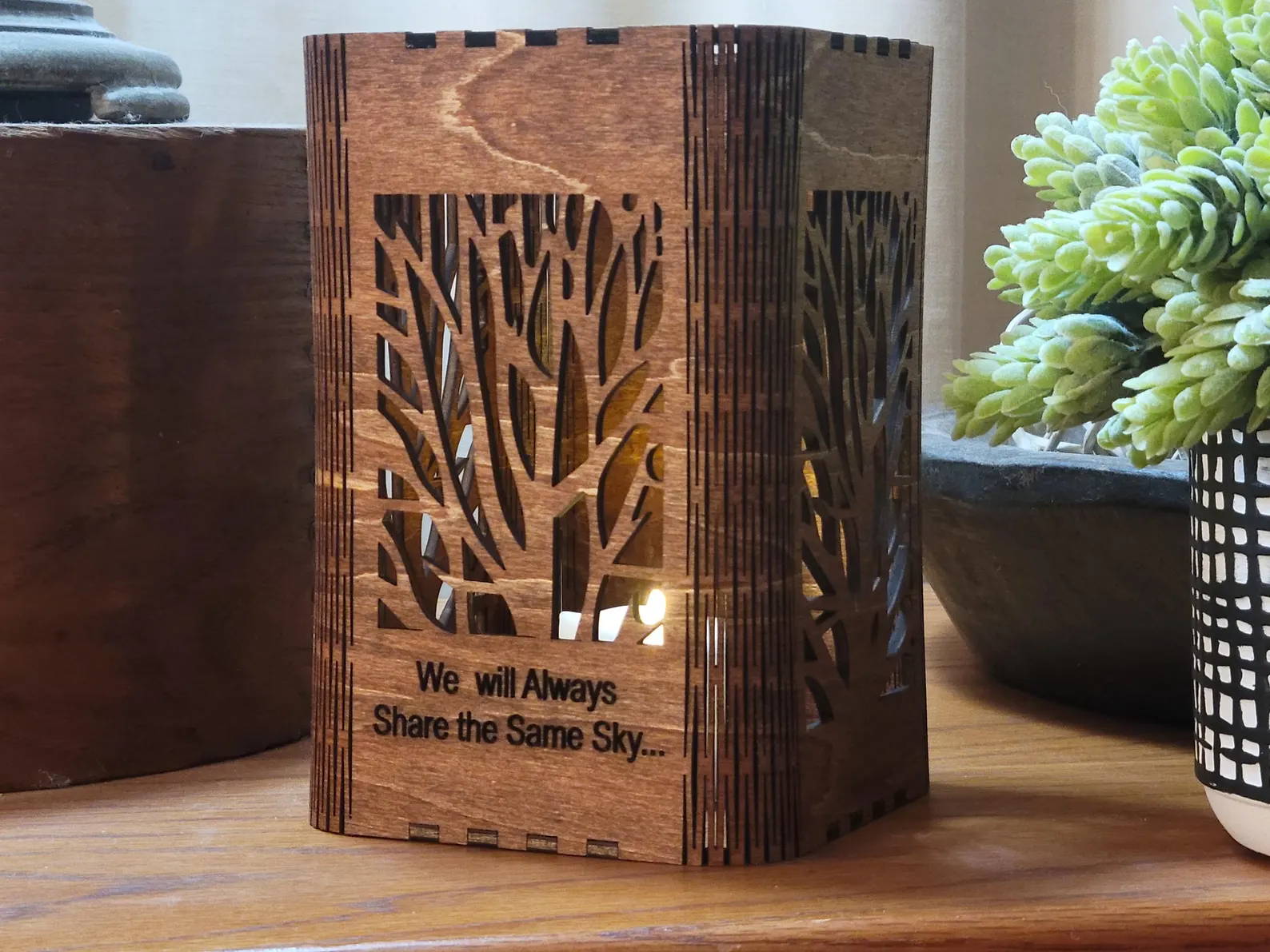
Best Thickness for a Wooden Light Box
For most laser-cut wooden light boxes, 3mm / 1/8 inch plywood is the best thickness.
Why? Because it balances all the things you need:
· thin enough for clean diode-laser cutting
· thick enough to stay rigid
· lightweight enough for stacked layers
· common enough to find in pre-cut laser sheets
· easy to fit into a shadow-box-style frame
Typical thickness recommendations
· Inner decorative layers: 3mm / 1/8 inch
· Front frame: 3mm or sometimes 4mm if you want extra stiffness
· Outer box sides: 3mm to 5mm depending on size
· Backing panel: 3mm is usually enough
If you’re building a very large wall-mounted light box, you may want a slightly thicker frame material. But for standard desktop, shelf, and gift-sized projects, 1/8 inch plywood is the go-to choice.
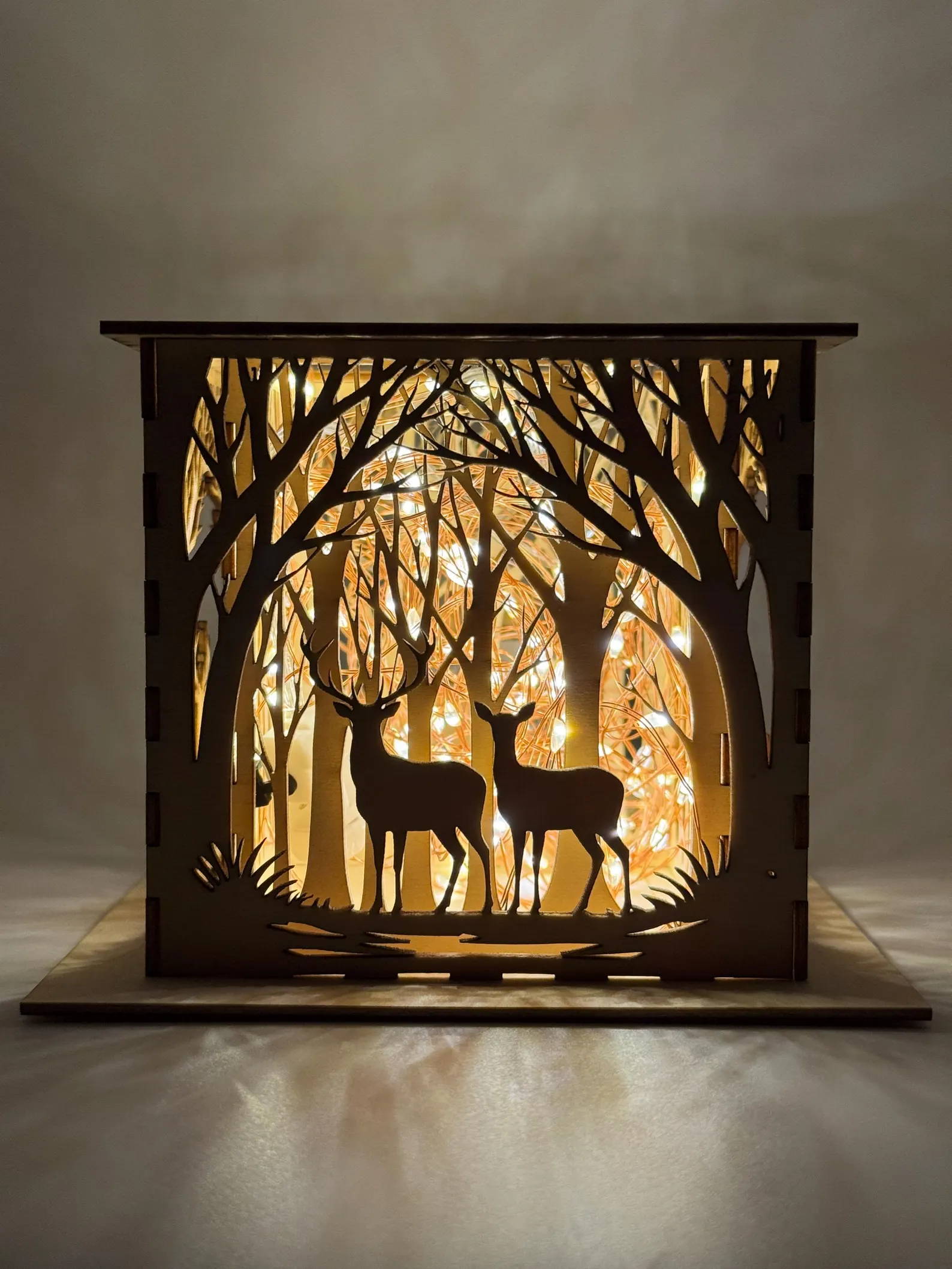
Wooden Light Box Examples: Matching the Material to the Project
1. Nursery Name Light Box
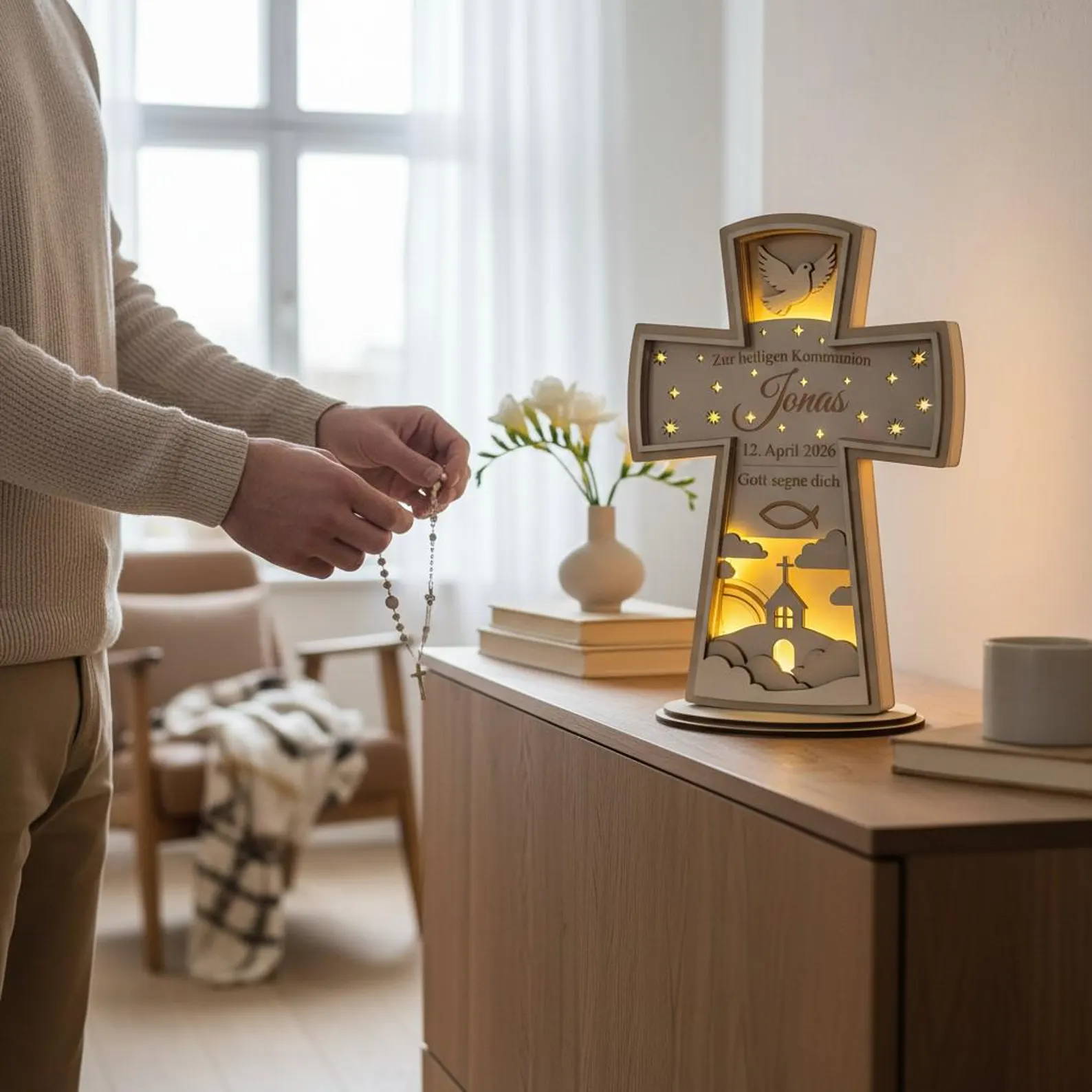
A moon, clouds, stars, and baby name design benefits from basswood or birch plywood. Basswood works well for tiny stars and script lettering, while birch gives the outer frame a cleaner premium look.
2. Forest Shadow Box for Home Decor
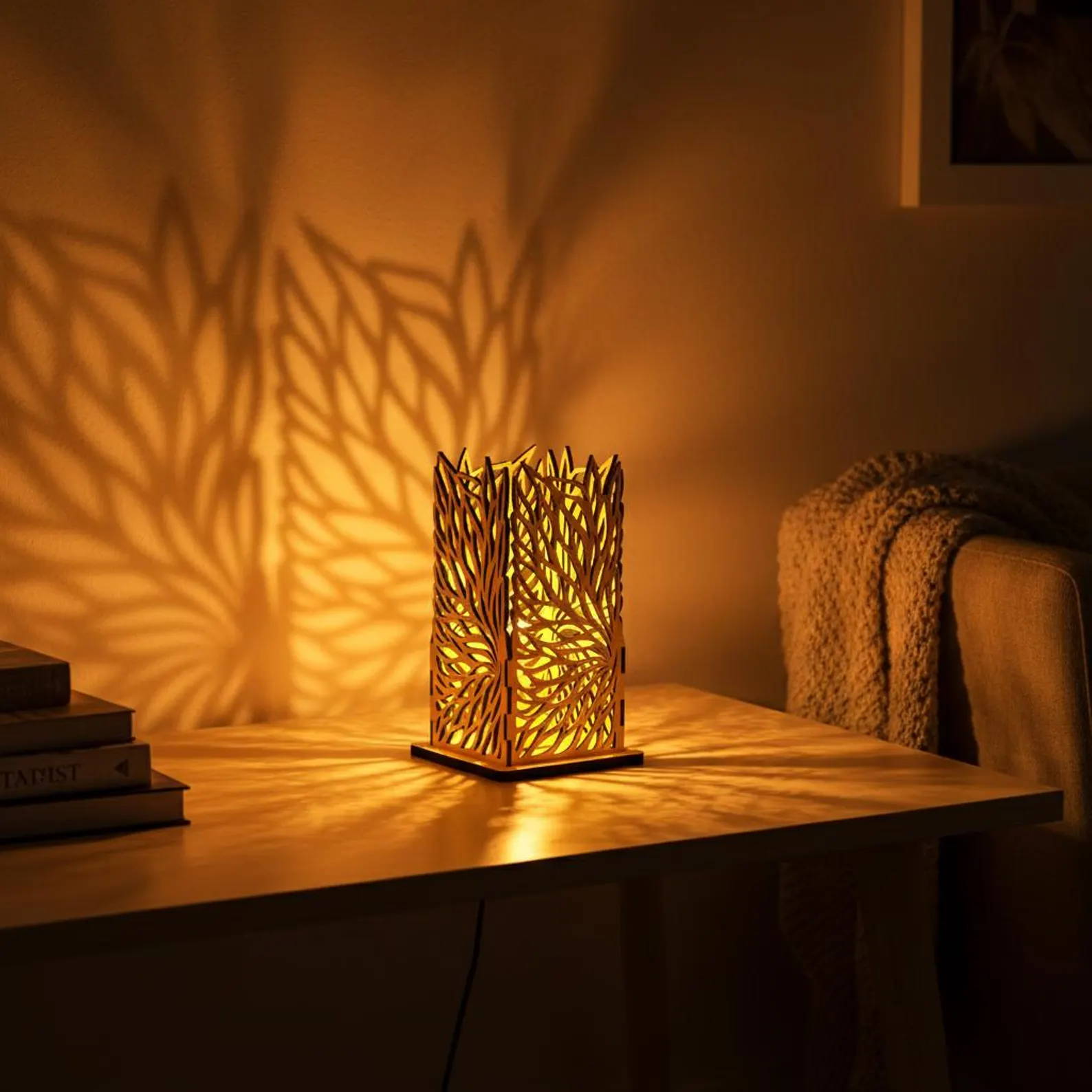
For layered trees, deer silhouettes, mountains, and a glowing sunset effect, birch plywood is one of the best choices. It provides enough strength for multiple layers and looks excellent with a natural or lightly stained finish.
3. Holiday Village Window Light Box
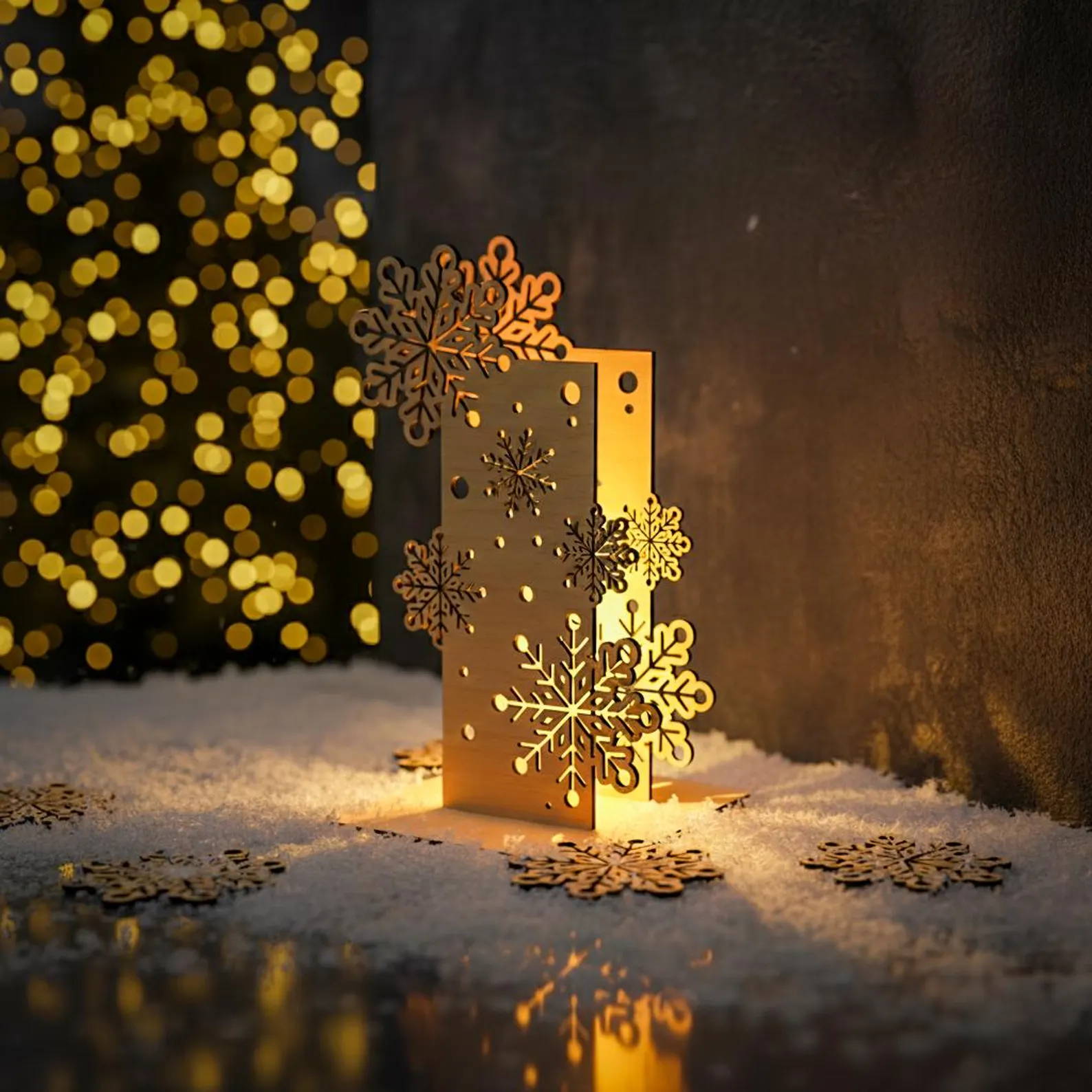
A Christmas village, snow scene, or nativity box often has lots of small architectural details. A combination of basswood for the inner layers and birch for the frame works beautifully here.
4. Anime, Fantasy, or Game-Inspired Light Box
These designs often include detailed silhouettes and multiple depth layers. Basswood is great for the detailed inner scene layers, while poplar or birch can be used for the front panel and enclosure.
5. Wedding or Anniversary Light Box
For elegant gifts with names, dates, florals, and LED backlighting, birch or maple veneer plywood gives the most polished look.
My Recommended Material Strategy for Beginners
If you’re new to making wooden light boxes with an AlgoLaser machine, I’d keep it simple:
Best beginner setup
· Main material: 1/8" birch plywood
· Optional second material: 1/8" basswood plywood for detailed inner layers
· LED source: warm white LED strip or fairy light string
· Finish: natural clear coat, light stain, or matte paint depending on style
This approach gives you:
· easy sourcing
· reliable cutting
· attractive finished appearance
· flexibility across many project types
· enough strength for both art layers and frame construction
AlgoLaser Tips for Cutting Wooden Light Box Materials
When making a layered wood light box, material choice and machine setup go hand in hand. A few practical tips:
Use clean, flat sheets
Before loading your wood, check for warping. Flat sheets produce more consistent cuts and cleaner alignment.
Mask the surface if you want cleaner faces
Transfer tape or masking paper can reduce smoke staining on light-colored plywood, especially if you’re making a natural-finish display piece.
Keep layer designs structurally sound
Thin bridges, floating islands, and very narrow tabs may look good on screen but can break during assembly if the wood is too delicate.
Test cut before a full batch
Even among birch or basswood sheets, glue density and wood grain can vary. Always test your settings on a small corner before cutting a full multi-layer light box set.
Match the material to the machine’s role
If you’re using an AlgoLaser machine for both cutting and engraving, choose wood that performs well in both categories. Birch is a strong all-around candidate because it can handle frame cuts, engraved details, and decorative front panels in one material family.
FAQs About Wooden Light Box Materials
1. Is birch plywood better than basswood for a wooden light box?
In most cases, yes—birch plywood is better as an all-around wooden light box material because it offers more rigidity, a more premium look, and excellent cutting performance. Basswood is still fantastic for fine-detail inner layers.
2. What thickness wood should I use for a laser-cut light box?
For most projects, 3mm or 1/8 inch plywood is the best thickness. It cuts well, stays reasonably rigid, and works perfectly for layered scenes and light box frames.
3. Can I use MDF for a wooden light box?
Yes, but it’s usually best for painted budget projects rather than premium natural-wood display pieces. MDF is smooth and affordable, but it creates more smoke and doesn’t have the attractive grain of plywood.
4. What is the best wood for intricate light box layers?
Basswood plywood is one of the best choices for intricate inner layers because it is lightweight, soft, and easy to cut with detailed shapes.
5. Should I use the same material for every part of the light box?
Not necessarily. Many makers use birch plywood for the frame and basswood for the decorative layers. That combination gives you both structural strength and fine detail.
6. What’s the best beginner material for making wooden light boxes with an AlgoLaser machine?
For beginners, I recommend starting with 1/8" birch plywood. It’s versatile, attractive, strong enough for frames, and suitable for many different wooden light box styles, from nursery night lights to layered scenic shadow boxes.
Final Verdict: What Are the Best Materials for Making a Wooden Light Box?
If I had to rank the best materials for making a wooden light box, I’d put them in this order for most makers:
Best overall
1. 1/8" Birch plywood
The best balance of strength, finish quality, rigidity, and laser-cut performance.
Best for intricate inner layers
2. 1/8" Basswood plywood
Excellent for delicate detail, lightweight multi-layer scenes, and easy cutting.
Best for painted builds
3. Poplar plywood
A practical option for painted decorative light boxes and modern display pieces.
Best budget paint-grade option
4. MDF
Usable for painted projects, but less attractive and less premium than plywood.
Best premium decorative option
5. Maple or hardwood veneer plywood
Great for upscale display pieces if budget and sourcing are less of a concern.
For most people building layered illuminated wood art, birch plywood remains the best starting point, especially when paired with a reliable laser engraver and cutter. If you want to make shadow boxes, personalized night lights, decorative shelf art, or gift-ready LED wood displays, a good birch sheet will make the process easier and the final piece look more professional.
And if you want a practical, maker-friendly option for your next project, AlgoLaser’s recommended 1/8" birchwood plywood sheets (6pcs)are a very sensible place to start.


